Help centerReferenceUpdated Oct 8, 2026
Metrics explained
What every number in GEO Radar means, when it appears and how to read its markers.
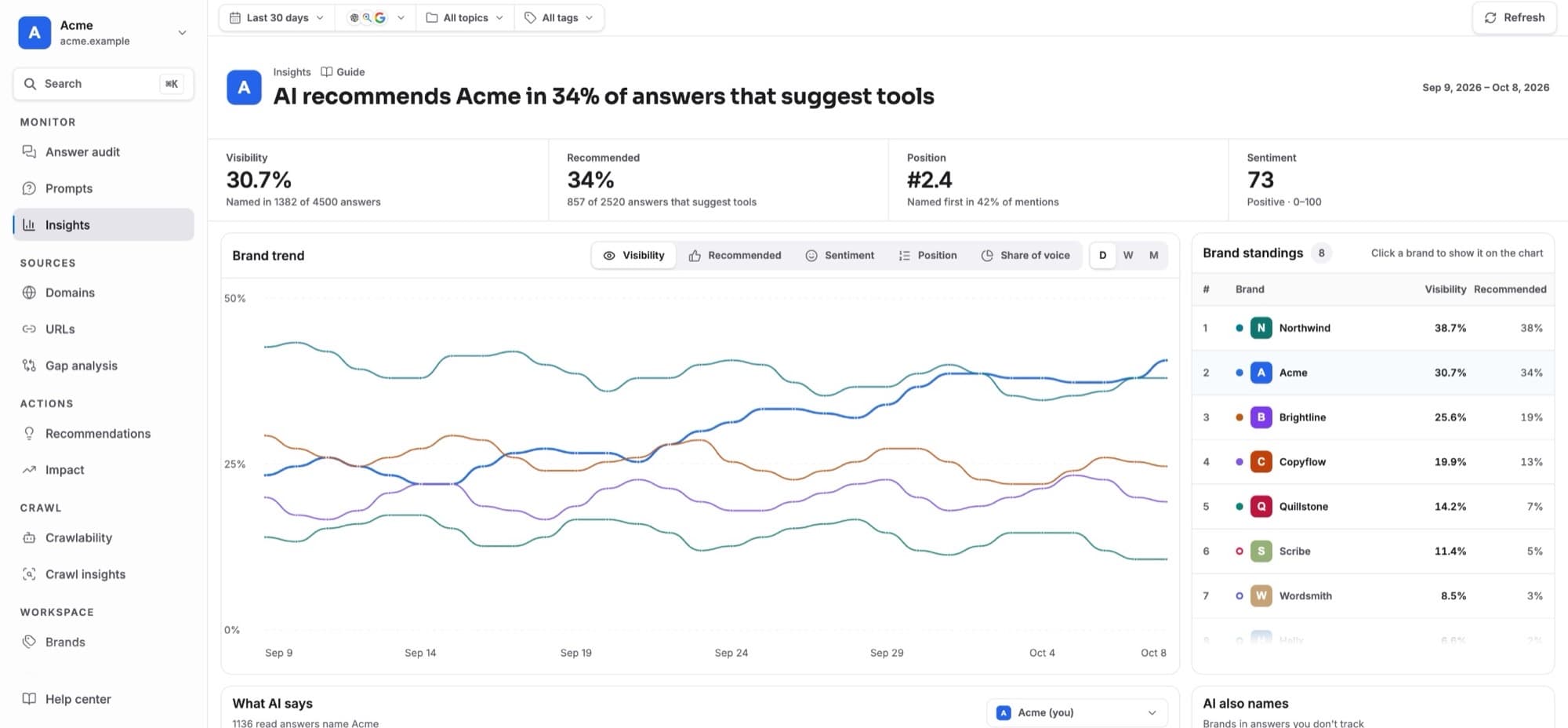
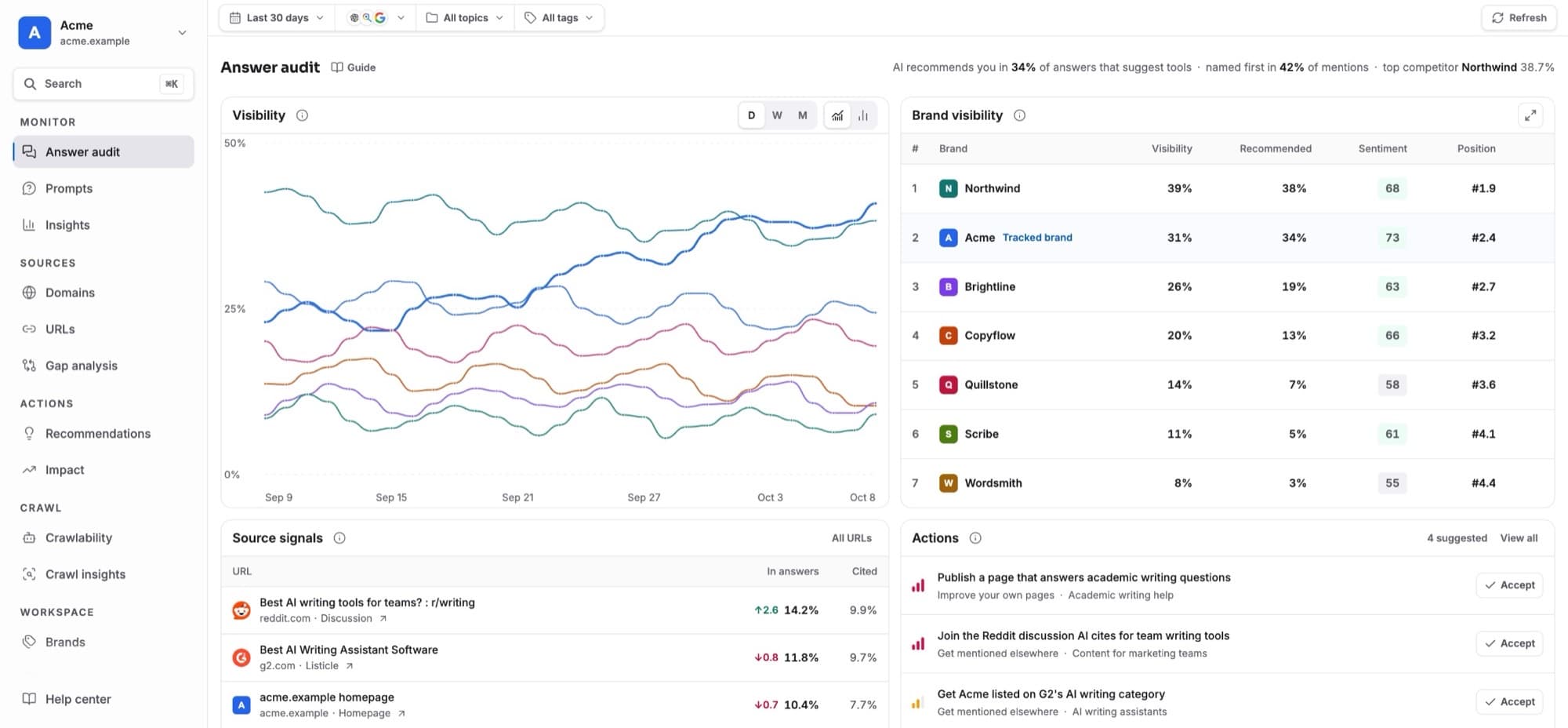
Every number in GEO Radar is counted from real AI answers in the selected range and filters. Here is what each one means, when it appears, and how to read the markers next to it.
How answers are read
After a scan, every answer is read once. For each brand it names, GEO Radar notes where the brand appears, whether the answer recommends it, how positive the answer is, and the exact words it uses. Brands you don’t track are noted too; they appear in AI also names.
Brand metrics
- Visibility
- What it means: How often AI names the brand, out of all answers.
- Shows a number after: 10 answers
- Recommended
- What it means: When AI recommends a product, how often it recommends this brand.
- Shows a number after: 5 answers that recommend a product
- Position
- What it means: How early in the answer the brand appears. #1 is named first.
- Shows a number after: 3 mentions
- Sentiment
- What it means: How positively AI talks about the brand, from 0 to 100. 50 is neutral.
- Shows a number after: 3 mentions
- Share of voice
- What it means: The brand's share of all brand mentions. Being named earlier counts more.
- Shows a number after: 10 answers
| Metric | What it means | Shows a number after |
|---|---|---|
| Visibility | How often AI names the brand, out of all answers. | 10 answers |
| Recommended | When AI recommends a product, how often it recommends this brand. | 5 answers that recommend a product |
| Position | How early in the answer the brand appears. #1 is named first. | 3 mentions |
| Sentiment | How positively AI talks about the brand, from 0 to 100. 50 is neutral. | 3 mentions |
| Share of voice | The brand's share of all brand mentions. Being named earlier counts more. | 10 answers |
Until then the value shows “—” and charts leave a gap. A dash means “not enough answers to say”, never zero.
Source metrics
- Appearances
- What it means: How many answers used the source.
- Citation rate
- What it means: How often the source was shown to the reader, not only read.
- Answer reach / In answers
- What it means: The share of all answers that used the source.
- Gap answers
- What it means: Answers that cite the source and name a competitor, but not you.
- Opportunity
- What it means: How much the source is worth winning compared with the others in view: High, Medium or Low.
| Metric | What it means |
|---|---|
| Appearances | How many answers used the source. |
| Citation rate | How often the source was shown to the reader, not only read. |
| Answer reach / In answers | The share of all answers that used the source. |
| Gap answers | Answers that cite the source and name a competitor, but not you. |
| Opportunity | How much the source is worth winning compared with the others in view: High, Medium or Low. |
Changes, ranks and “New”
Markers
- ↑3.4Up 3.4 points: better
- ↓1.8Down 1.8 points: worse
- ↓0.6Position: a lower number is better
- NewAbsent in the previous period
- ↑Moved up a rank (tooltip: the old rank)
- ↓Moved down
Ties share a rank. After a model change, both periods use only the models that answered in both, and the tooltip says “same models: …”.
Most important first
Lists of answers, prompts and evidence open with what needs your attention. Answers where a competitor is recommended and you are missing come first, then answers where a competitor is named without you, then the rest. Recent answers and answers about buying a product rank higher. A short label on each row says why it is there. Needs attention collects the answers worth acting on; Wins collects the answers that recommend you near the top.